License Plate Readers in Greeley: How They Work and How We Protect Your Privacy

Share License Plate Readers in Greeley: How They Work and How We Protect Your Privacy on Facebook Share License Plate Readers in Greeley: How They Work and How We Protect Your Privacy on X (formerly Twitter) Share License Plate Readers in Greeley: How They Work and How We Protect Your Privacy on Linkedin Email License Plate Readers in Greeley: How They Work and How We Protect Your Privacy link

ALPR Program

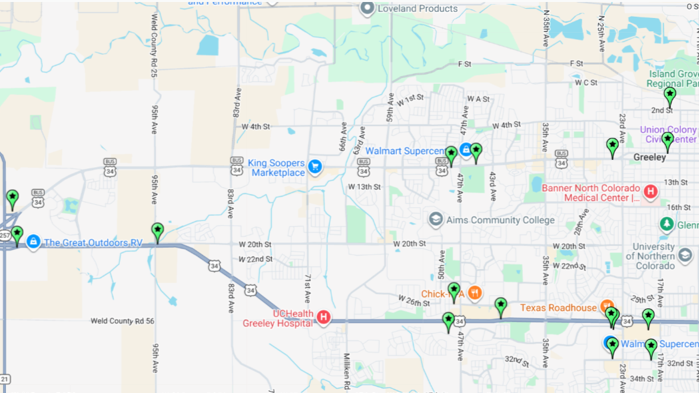
The Greeley Police Department uses automated license plate readers, or ALPRs, to help find stolen vehicles, missing people, and vehicles connected to crimes. These cameras read license plates on public roads and compare them to lists of vehicles that police are already looking for.

We know residents want two things at once: a safe community and strong protection of their privacy. This page explains what the cameras do and don't do, how we use the information, the limits we've put in place, and what we've changed after hearing from City Council and the community.

At a glance

  • What the cameras capture: A vehicle's license plate, the state, the vehicle's type and color, and the time and location.
  • What they don't capture: Faces, drivers, passengers, or personal information. The cameras do not use facial recognition.
  • How long data is kept: 21 days, unless it's needed as evidence in a criminal case.
  • Who can search it: Only trained, authorized personnel, for a documented law enforcement reason. Every search is logged.
  • What it's never used for: Immigration enforcement, proactive traffic tickets, personal use, harassment, or targeting anyone based on a protected characteristic.


Why it matters

Vehicles are part of nearly every crime we investigate. Burglaries, robberies, hit-and-runs, retail theft, and domestic violence calls often involve a vehicle arriving or leaving. When a victim or witness can only tell us about a vehicle, a license plate reader can turn that small detail into a real lead.

Time matters. In a missing-person case or after a violent crime, the first hours count. Information that once took hours to share through a bulletin can now reach officers in seconds.

How ALPR helps in Greeley. A Police Department review documented 297 cases supported by ALPR from January 2021 through August 2026, including:

Number of CasesResult
78Arrests
46Stolen vehicles recovered
13Stolen license plates recovered


These cases range from vehicle theft and hit-and-run crashes to missing persons, wanted-person arrests, and property and violent crime.

From 2024 to 2025, motor vehicle theft in Greeley declined 35%, and violent crime declined 6%. Technology isn't the only reason. Officers, dispatchers, prosecutors, community partners, and residents all play a role. But ALPR is one of the tools that helps us work more effectively.


Real-world uses

An alert is a starting point, not a decision. When a camera flags a vehicle, officers verify the plate and state, confirm the record with dispatch, and ensure there is a legal reason before contacting anyone. Cameras can misread plates or match outdated records, which is why a person always checks first.

  • Finding a missing person: In October 2024, a Southern Colorado law-enforcement agency entered a missing older adult and associated vehicle information into state and national law-enforcement databases, as well as a Flock Safety hot list. Greeley Police received a Flock camera alert when the vehicle entered the city during the early morning hours. Officers located the vehicle and confirmed that the driver was lost but safe. The individual was reunited with family later that morning.

  • Solving a hit-and-run: In late October 2026, officers investigated a hit-and-run that seriously injured a pedestrian on Highway 85. Evidence recovered at the scene helped guide the investigation, and officers used the city’s Flock Safety automated license plate reader camera system to cross-reference that evidence. The system generated a match that provided investigators with a suspect vehicle description. Officers located the vehicle and took two individuals into custody in connection with the incident.
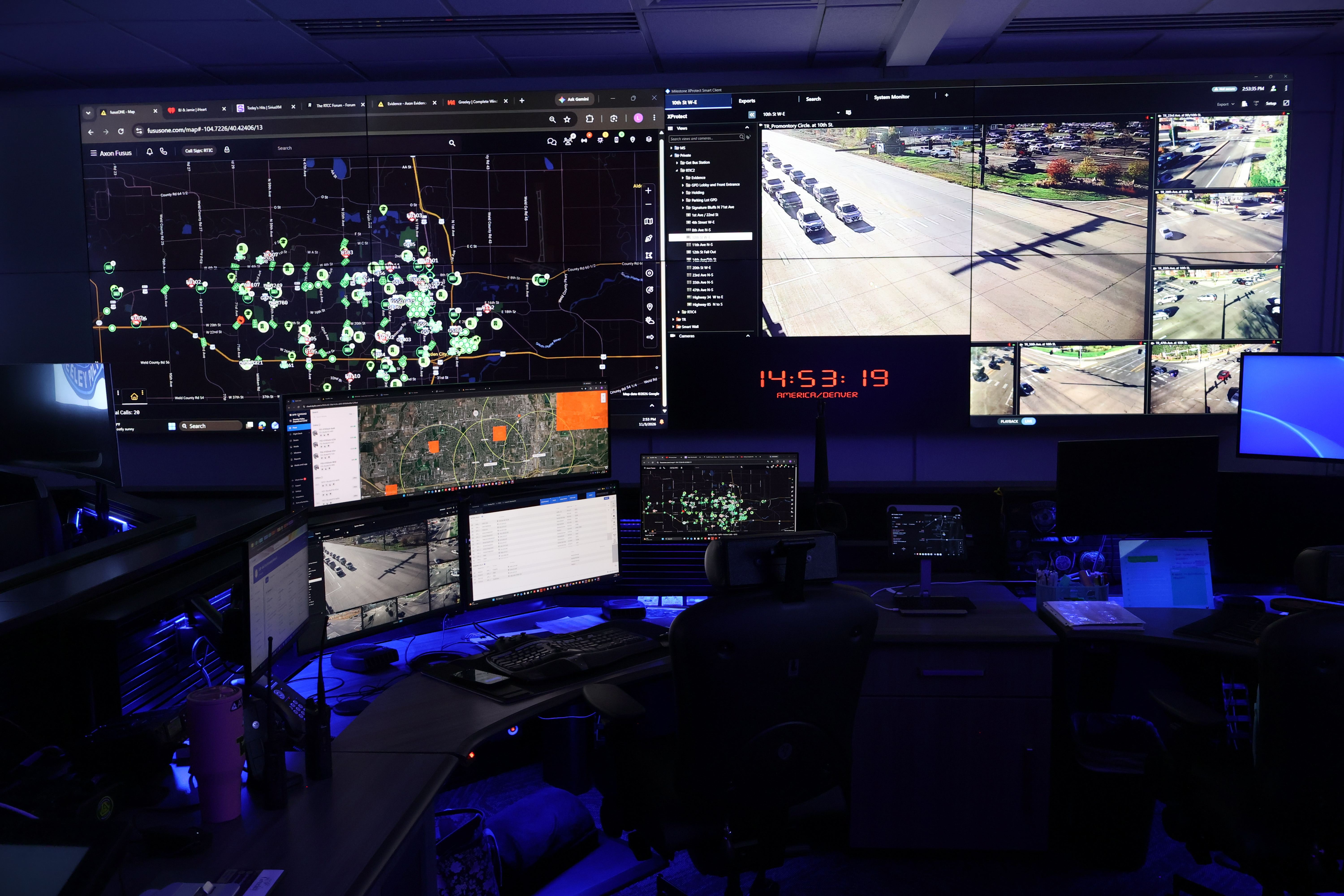
  • monitors of city streets and a map of Greeley with computer work stations.Recovering a stolen car: In September 2026, the Greeley Police Department used Flock Safety automated license plate reader (ALPR) technology to identify a vehicle reported stolen from another jurisdiction. Flock camera alerts helped investigators locate the vehicle, while real-time drone support from the Real Time Information Center provided additional situational awareness. Greeley Police officers coordinated with state and regional law-enforcement partners to safely stop the vehicle on Highway 34. The driver was taken into custody without incident on motor vehicle theft-related charges.

  • Warrant Arrest: In May 2026, Greeley Police officers were searching for an individual with multiple felony warrants. The vehicle associated with the individual was entered into the Flock Safety automated license plate reader system as a “Hot List” vehicle. When the vehicle was detected by Flock cameras in Greeley, Real Time Information Center staff used traffic cameras to monitor its location and provide updates to responding officers. Officers located the vehicle, confirmed the driver’s identity, and conducted a traffic stop, resulting in the individual's arrest.

  • Solving a homicide: Solving a homicide: In October 2021, officers responded to a residential fire that was later determined to have been intentionally set to conceal a homicide. Initial evidence included limited surveillance footage showing two individuals and an unidentified vehicle leaving the area shortly after the fire began. Investigators cross-referenced location data from the victim’s phone with automated license plate reader (ALPR) records, identifying a vehicle captured near the scene within minutes of the incident. The ALPR lead enabled detectives to identify and locate the individuals involved, resulting in arrests and successful criminal prosecutions.

  • Capture suspect vehicle leaving the scene or area of a crime. In July 2026, Greeley Police investigated an incident involving an alleged assault and concerns for a child’s safety after a suspect left the area in a vehicle. Flock Safety automated license plate reader cameras helped identify and locate the suspect vehicle as it departed the scene. Real Time Information Center staff then deployed a Drone as a first responder to monitor the vehicle and provide its location to responding officers. Officers located the vehicle and took the suspect into custody.


How we protect your privacy

SafeguardWhat it means for you
No facial recognitionCameras capture vehicles and plates, not people. They do not identify drivers or passengers.
Short retentionFlock data is deleted after 21 days unless it's needed as evidence in a criminal case.
Limited accessOnly trained, authorized personnel with an official law-enforcement purpose may search the data.
Every search documentedBefore searching, employees must enter a case or call number and choose one of six specific reasons. Every search is logged.
Monthly auditsThe department reviews ALPR use every month to ensure searches comply with policy.
No out-of-state or national sharingGreeley turned off all out-of-state and national data sharing on September 9, 2026, and all in-state data sharing on October 28, 2026
Not for saleGreeley owns its Flock data. It is never sold to third parties.
Prohibited usesThe data may not be used for immigration enforcement, proactive traffic tickets, personal reasons, harassment, or targeting anyone based on a protected characteristic.
Consequences for misuseMisuse is investigated and may result in discipline, termination, referral to the District Attorney, and loss of an officer's state certification.


Where the program stands today

We listened, and we made changes. On Sept. 8, 2026, the Police Department presented its ALPR program to City Council at a work session. Council members and residents raised questions about privacy, data sharing, oversight, and how long data is kept. The department reviewed the program with those concerns in mind and made these changes.

What we heardWhat we changed
Concern about Greeley data being accessed by agencies in other states or nationallyTurned off all in-state and national ALPR data sharing, effective October 28, 2026.
Data is kept too longReduced Flock data retention from 30 days to 21 days
Need for stronger oversightBegan auditing ALPR use every month
Searches should have a clear, documented reasonEvery search now requires a case or call number and one of six specific reasons, down from 43


State-funded Elsag cameras are ending. Separately, on Sept. 4, 2026, the State of Colorado notified the City that it will stop funding the Elsag ALPR cameras after 2026 due to reduced funding from the Colorado Auto Theft Prevention Authority. This affects two truck-mounted systems and the cameras on two speed trailers. Greeley is ending its contract and will work with the Colorado State Patrol to return or dispose of the equipment.

What's next. City Council is reviewing policy options for ALPR technology. We'll update this page as decisions are made.


State Landscape on License Plate Readers

License plate readers are being discussed across Colorado and the country. Greeley follows these conversations closely and will comply with any changes in state or federal law.

Colorado. In 2026, a bipartisan bill, Senate Bill 26-070, proposed new statewide limits on license plate reader data. It passed a Senate committee in February but was set aside on April 29, which ended it for the session. Lawmakers may take up the topic again when the Legislature meets in January 2027.

Here is how Greeley's current practices compare with what the bill proposed:


TopicSB-26-070
PROPOSED BILL
Today in Greeley
Data retentionMost data kept no longer than 30 days21 days, unless needed as evidence
Out-of-state sharingProhibitedTurned off on September 9, 2026.
Sharing with third partiesProhibitedData is never sold; sharing only for legitimate law enforcement purposes, and documented
Warrant for older dataRequired for data older than 72 hoursNot required; a case or call number and a documented reason are required for every search


A second 2026 proposal. Senate Bill 26-071, the Surveillance Accountability and Freedom Ensured (SAFE) Act, proposed statewide rules for how law enforcement uses surveillance technology, including license plate readers, facial recognition, and drones. It would have set retention limits by technology type, banned the sale of surveillance data, limited sharing to active investigations, required a warrant for most uses of facial recognition, and called for audits by the Colorado Attorney General every two years. The bill was held in the Senate Judiciary Committee on Feb. 23, 2026, and did not become law. Greeley already prohibits selling its data, and its cameras do not use facial recognition.

ALPR Program

The Greeley Police Department uses automated license plate readers, or ALPRs, to help find stolen vehicles, missing people, and vehicles connected to crimes. These cameras read license plates on public roads and compare them to lists of vehicles that police are already looking for.

We know residents want two things at once: a safe community and strong protection of their privacy. This page explains what the cameras do and don't do, how we use the information, the limits we've put in place, and what we've changed after hearing from City Council and the community.

At a glance

  • What the cameras capture: A vehicle's license plate, the state, the vehicle's type and color, and the time and location.
  • What they don't capture: Faces, drivers, passengers, or personal information. The cameras do not use facial recognition.
  • How long data is kept: 21 days, unless it's needed as evidence in a criminal case.
  • Who can search it: Only trained, authorized personnel, for a documented law enforcement reason. Every search is logged.
  • What it's never used for: Immigration enforcement, proactive traffic tickets, personal use, harassment, or targeting anyone based on a protected characteristic.


Why it matters

Vehicles are part of nearly every crime we investigate. Burglaries, robberies, hit-and-runs, retail theft, and domestic violence calls often involve a vehicle arriving or leaving. When a victim or witness can only tell us about a vehicle, a license plate reader can turn that small detail into a real lead.

Time matters. In a missing-person case or after a violent crime, the first hours count. Information that once took hours to share through a bulletin can now reach officers in seconds.

How ALPR helps in Greeley. A Police Department review documented 297 cases supported by ALPR from January 2021 through August 2026, including:

Number of CasesResult
78Arrests
46Stolen vehicles recovered
13Stolen license plates recovered


These cases range from vehicle theft and hit-and-run crashes to missing persons, wanted-person arrests, and property and violent crime.

From 2024 to 2025, motor vehicle theft in Greeley declined 35%, and violent crime declined 6%. Technology isn't the only reason. Officers, dispatchers, prosecutors, community partners, and residents all play a role. But ALPR is one of the tools that helps us work more effectively.


Real-world uses

An alert is a starting point, not a decision. When a camera flags a vehicle, officers verify the plate and state, confirm the record with dispatch, and ensure there is a legal reason before contacting anyone. Cameras can misread plates or match outdated records, which is why a person always checks first.

  • Finding a missing person: In October 2024, a Southern Colorado law-enforcement agency entered a missing older adult and associated vehicle information into state and national law-enforcement databases, as well as a Flock Safety hot list. Greeley Police received a Flock camera alert when the vehicle entered the city during the early morning hours. Officers located the vehicle and confirmed that the driver was lost but safe. The individual was reunited with family later that morning.

  • Solving a hit-and-run: In late October 2026, officers investigated a hit-and-run that seriously injured a pedestrian on Highway 85. Evidence recovered at the scene helped guide the investigation, and officers used the city’s Flock Safety automated license plate reader camera system to cross-reference that evidence. The system generated a match that provided investigators with a suspect vehicle description. Officers located the vehicle and took two individuals into custody in connection with the incident.

  • monitors of city streets and a map of Greeley with computer work stations.Recovering a stolen car: In September 2026, the Greeley Police Department used Flock Safety automated license plate reader (ALPR) technology to identify a vehicle reported stolen from another jurisdiction. Flock camera alerts helped investigators locate the vehicle, while real-time drone support from the Real Time Information Center provided additional situational awareness. Greeley Police officers coordinated with state and regional law-enforcement partners to safely stop the vehicle on Highway 34. The driver was taken into custody without incident on motor vehicle theft-related charges.

  • Warrant Arrest: In May 2026, Greeley Police officers were searching for an individual with multiple felony warrants. The vehicle associated with the individual was entered into the Flock Safety automated license plate reader system as a “Hot List” vehicle. When the vehicle was detected by Flock cameras in Greeley, Real Time Information Center staff used traffic cameras to monitor its location and provide updates to responding officers. Officers located the vehicle, confirmed the driver’s identity, and conducted a traffic stop, resulting in the individual's arrest.

  • Solving a homicide: Solving a homicide: In October 2021, officers responded to a residential fire that was later determined to have been intentionally set to conceal a homicide. Initial evidence included limited surveillance footage showing two individuals and an unidentified vehicle leaving the area shortly after the fire began. Investigators cross-referenced location data from the victim’s phone with automated license plate reader (ALPR) records, identifying a vehicle captured near the scene within minutes of the incident. The ALPR lead enabled detectives to identify and locate the individuals involved, resulting in arrests and successful criminal prosecutions.

  • Capture suspect vehicle leaving the scene or area of a crime. In July 2026, Greeley Police investigated an incident involving an alleged assault and concerns for a child’s safety after a suspect left the area in a vehicle. Flock Safety automated license plate reader cameras helped identify and locate the suspect vehicle as it departed the scene. Real Time Information Center staff then deployed a Drone as a first responder to monitor the vehicle and provide its location to responding officers. Officers located the vehicle and took the suspect into custody.


How we protect your privacy

SafeguardWhat it means for you
No facial recognitionCameras capture vehicles and plates, not people. They do not identify drivers or passengers.
Short retentionFlock data is deleted after 21 days unless it's needed as evidence in a criminal case.
Limited accessOnly trained, authorized personnel with an official law-enforcement purpose may search the data.
Every search documentedBefore searching, employees must enter a case or call number and choose one of six specific reasons. Every search is logged.
Monthly auditsThe department reviews ALPR use every month to ensure searches comply with policy.
No out-of-state or national sharingGreeley turned off all out-of-state and national data sharing on September 9, 2026, and all in-state data sharing on October 28, 2026
Not for saleGreeley owns its Flock data. It is never sold to third parties.
Prohibited usesThe data may not be used for immigration enforcement, proactive traffic tickets, personal reasons, harassment, or targeting anyone based on a protected characteristic.
Consequences for misuseMisuse is investigated and may result in discipline, termination, referral to the District Attorney, and loss of an officer's state certification.


Where the program stands today

We listened, and we made changes. On Sept. 8, 2026, the Police Department presented its ALPR program to City Council at a work session. Council members and residents raised questions about privacy, data sharing, oversight, and how long data is kept. The department reviewed the program with those concerns in mind and made these changes.

What we heardWhat we changed
Concern about Greeley data being accessed by agencies in other states or nationallyTurned off all in-state and national ALPR data sharing, effective October 28, 2026.
Data is kept too longReduced Flock data retention from 30 days to 21 days
Need for stronger oversightBegan auditing ALPR use every month
Searches should have a clear, documented reasonEvery search now requires a case or call number and one of six specific reasons, down from 43


State-funded Elsag cameras are ending. Separately, on Sept. 4, 2026, the State of Colorado notified the City that it will stop funding the Elsag ALPR cameras after 2026 due to reduced funding from the Colorado Auto Theft Prevention Authority. This affects two truck-mounted systems and the cameras on two speed trailers. Greeley is ending its contract and will work with the Colorado State Patrol to return or dispose of the equipment.

What's next. City Council is reviewing policy options for ALPR technology. We'll update this page as decisions are made.


State Landscape on License Plate Readers

License plate readers are being discussed across Colorado and the country. Greeley follows these conversations closely and will comply with any changes in state or federal law.

Colorado. In 2026, a bipartisan bill, Senate Bill 26-070, proposed new statewide limits on license plate reader data. It passed a Senate committee in February but was set aside on April 29, which ended it for the session. Lawmakers may take up the topic again when the Legislature meets in January 2027.

Here is how Greeley's current practices compare with what the bill proposed:


TopicSB-26-070
PROPOSED BILL
Today in Greeley
Data retentionMost data kept no longer than 30 days21 days, unless needed as evidence
Out-of-state sharingProhibitedTurned off on September 9, 2026.
Sharing with third partiesProhibitedData is never sold; sharing only for legitimate law enforcement purposes, and documented
Warrant for older dataRequired for data older than 72 hoursNot required; a case or call number and a documented reason are required for every search


A second 2026 proposal. Senate Bill 26-071, the Surveillance Accountability and Freedom Ensured (SAFE) Act, proposed statewide rules for how law enforcement uses surveillance technology, including license plate readers, facial recognition, and drones. It would have set retention limits by technology type, banned the sale of surveillance data, limited sharing to active investigations, required a warrant for most uses of facial recognition, and called for audits by the Colorado Attorney General every two years. The bill was held in the Senate Judiciary Committee on Feb. 23, 2026, and did not become law. Greeley already prohibits selling its data, and its cameras do not use facial recognition.

  • Important Update on the Public Safety and Autonomous Technology Petition

    Share Important Update on the Public Safety and Autonomous Technology Petition on Facebook Share Important Update on the Public Safety and Autonomous Technology Petition on X (formerly Twitter) Share Important Update on the Public Safety and Autonomous Technology Petition on Linkedin Email Important Update on the Public Safety and Autonomous Technology Petition link

    Greeley residents are looking for more information about a citizen-led petition on the use of technology for public safety and its implications for our community. We want to share an important update on where things stand with this initiative. It’s not just about automated license plate readers (ALPRs)—in fact, it covers a lot of different technologies that can help keep our community safe.

    The City Clerk’s Office has provided the key milestones in the initiative's timeline on their active petition page.

    What the Petition Proposes

    This ordinance is about limiting the City’s ability to “operate, receive, or access” technology used

    Greeley residents are looking for more information about a citizen-led petition on the use of technology for public safety and its implications for our community. We want to share an important update on where things stand with this initiative. It’s not just about automated license plate readers (ALPRs)—in fact, it covers a lot of different technologies that can help keep our community safe.

    The City Clerk’s Office has provided the key milestones in the initiative's timeline on their active petition page.

    What the Petition Proposes

    This ordinance is about limiting the City’s ability to “operate, receive, or access” technology used for surveillance and general policing from any intergovernmental or private source. This isn’t just about the Flock system that recognizes license plates; it also affects many tools used by the police and other city departments. These tools help gather information, monitor public safety incidents and various department requests within the city, and keep our public spaces safe. The petition restricts many types of technology that law enforcement in Greeley and other cities around the nation use to investigate crime.

    The ordinance defines “technology” as anything that uses cameras, sensors, or other devices combined with computer programs to monitor or predict where people, vehicles, or things are and how they move around in Greeley. This includes keeping records of that information without needing a human to be involved. It also includes the software and storage used to hold that data.

    Concerns About Public Safety

    The use of advanced technology in public safety is changing how law enforcement agencies keep communities safe. These new tools help create a safer environment for both the public and our hardworking safety personnel.

    However, there are significant concerns about the potential limitations this initiative may impose on Greeley’s Police Department and the City in addressing emergency calls, conducting criminal investigations, and more.

    Below are examples of key technologies that the proposed ordinance would impact; however, it is not limited to these:

    • Automated license plate readers
    • Facial recognition systems and other digital ways of identifying people, which could include fingerprints and DNA
    • Technology that recognizes devices or vehicles
    • Predictions about movements or behavior
    • Cameras that detect traffic violations
    • Drones, robots, or vehicles used for detecting criminal activity, and investigatory purposes
    • Partnerships for sharing data
    • Other similar technologies

    If any part of this ordinance conflicts with state or federal laws, that part will be unenforceable, but the rest will still stay in place.

    Potential Consequences

    The proposed ordinance, if adopted by the citizens of Greeley in an election, would create a law that extends beyond just license plate readers. It affects the majority of the technology utilized in our city’s public safety operations.

    Additionally, there is no warrant exception included in the proposed ordinance. Even if there were a warrant exception for the voluntary use of videos, it would be too cumbersome for the police department, the district attorney’s office, and the courts to manage the process of obtaining warrants for all evidence that could be collected voluntarily.

    Here are some tools and practices that could be adversely affected by the proposed ordinance if it is approved:

    • License plate readers are used to assist in locating missing or endangered individuals, stolen vehicles, and for investigations involving hit-and-run incidents. Public safety cameras, drones, and drone detection systems are deployed at large events, such as the Greeley Independence Stampede, to help find lost children in crowds, determine routes for emergency vehicles, or detect armed criminals on the run.
    • Automated traffic cameras, including those positioned at intersections, are utilized to investigate traffic accidents and monitor vehicles involved in criminal activities. All city-owned and operated cameras that automatically record, including ALPRs used for parking enforcement or to address business break-ins, play a crucial role in public safety. Additionally, speed enforcement photo radar vans are used to monitor and enforce traffic speed limits.
    • Drones and robots equipped with autonomous functions have been employed by public safety officials to assess situations before police or fire personnel arrive on the scene. These technologies can inspect suspicious packages or evaluate barricaded subjects, allowing authorities to gather information without risking officers' lives.
    • The Real-Time Information Center (RTIC) serves as the hub for gathering and sharing information. In recent times, the RTIC has supported 7,537 calls, resulting in 566 arrests and 199 cases cleared. It has been the first to respond in 4,212 instances, accounting for 56% of all responses. If this support were to disappear, officers would arrive at incidents with less information about weapons, suspect descriptions, and ongoing situations, making outcomes less safe for officers and delaying deconfliction with residents and suspects alike.
    • Residents and businesses may find their ability to share video footage from security cameras, including Ring Doorbells, significantly restricted under the proposed ordinance. Currently, sharing such footage does not require a warrant, enabling quick assistance in crime-solving efforts. However, the new ordinance would mandate obtaining a warrant before any video can be shared, potentially delaying investigations and hindering the urgent apprehension of criminals. This change could have serious implications for community safety and citizens' willingness to help solve crimes, even those that directly affect them, such as robbery.
    • Video and data-sharing agreements with partners, such as Weld County, emergency dispatch, and Greeley-Evans School District 6, limit our access to video footage of significant incidents, such as those involving active shooters. While body-worn cameras are required by state law and likely exempt from limitations under the ordinance, the legislation could still restrict their use to what is mandated by state law.

    Here are some questions that are still being looked at:

    • “Without human interaction”: What does this mean for tools that have some automated features but still require a person to operate them?
    • Warrants: The proposed law doesn’t mention anything about warrants. Since the proposed law would prohibit the city from receiving or accessing certain information, it is unclear how video evidence could be gathered with or without a warrant. It does not appear that law enforcement would be allowed to receive video that a citizen willingly wants to share.
    • State and federal law: Which parts of the proposed law would conflict with state or federal laws?

    We’ll provide updates as the review continues.

    Important Information Before Signing

    We encourage everyone to read the full text of any petition before signing, so you know exactly what changes it would bring. It is crucial to understand the proposed changes to make an informed decision.

    This is a critical moment for our community. We need to consider the implications this petition could have on our safety and the technology that helps protect us.

    Have Questions? If you have any questions about the petition or the initiative process, please reach out to the City Clerk’s office at cityclerks@greeleygov.com.

    Additionally, for inquiries specifically related to the ALPR program, you can utilize the “Ask an Expert” feature on our website or attend the upcoming information session scheduled for Monday, November 30, from 6 to 7 p.m. in the City Center South Council Chambers.


  • GPD Engages with Community on Public Safety Technology

    Share GPD Engages with Community on Public Safety Technology on Facebook Share GPD Engages with Community on Public Safety Technology on X (formerly Twitter) Share GPD Engages with Community on Public Safety Technology on Linkedin Email GPD Engages with Community on Public Safety Technology link
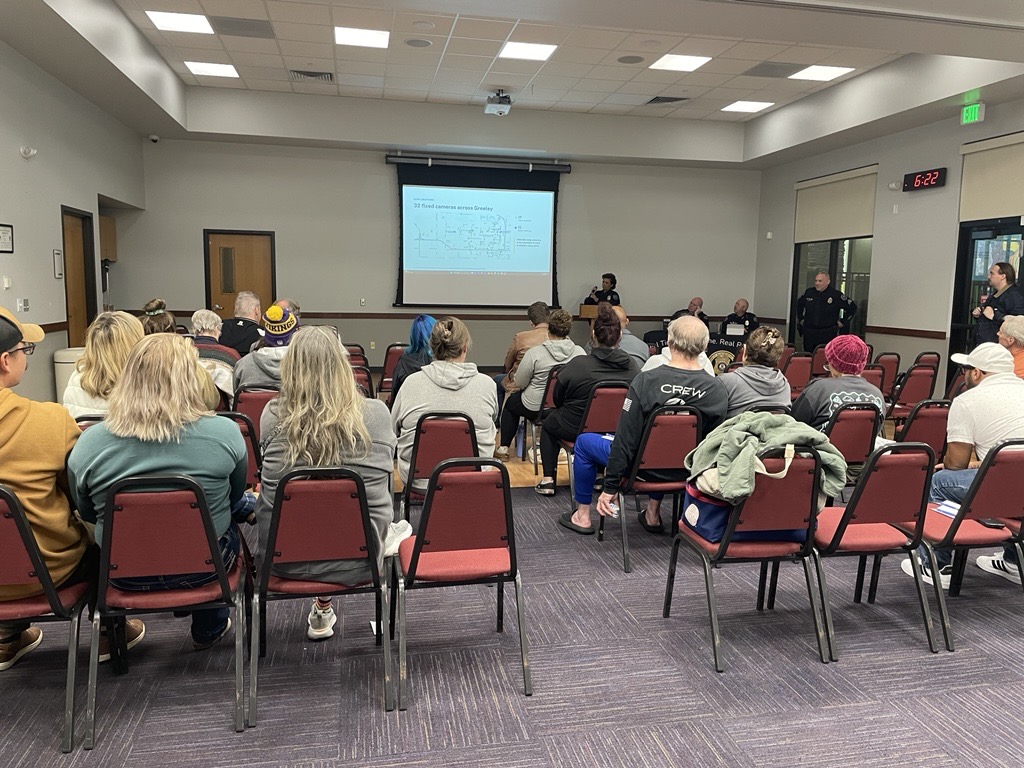
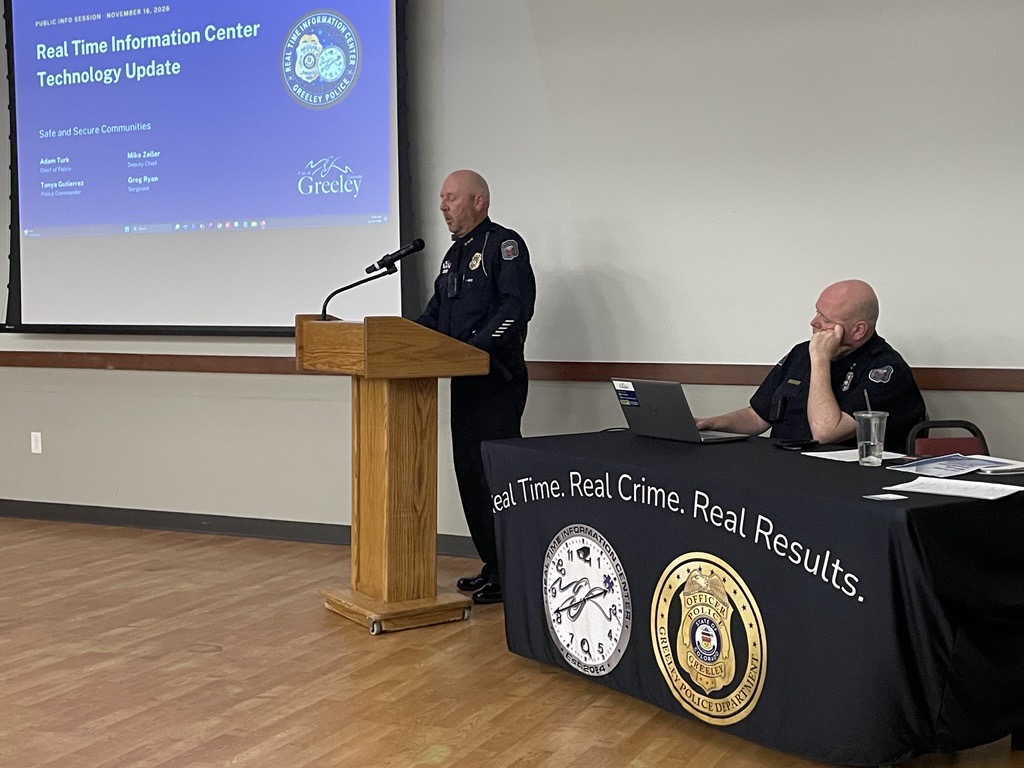
    Approximately 30 people attended the City of Greeley’s first public information session on Automated License Plate Readers (ALPRs) Monday night at the Greeley FunPlex.

    Greeley Police Department staff explained how ALPRs support public-safety investigations, including locating stolen vehicles and helping find missing or endangered people. Staff emphasized that an ALPR alert is only a starting point: an officer must verify the information and have a legal reason before taking action.

    The discussion focused on resident questions about privacy, data access and accountability. GPD shared that the cameras capture vehicle information—not faces, drivers or passengers—and do not use facial recognition. The department also outlined safeguards including restricted access for trained staff, documented reasons for searches, routine audits and a 21-day data-retention period.

    The City has made changes based on earlier community and City Council feedback, including ending out-of-state and national data sharing, ending in-state sharing, reducing data retention from 30 to 21 days and strengthening oversight requirements. Staff concluded the session with a 20-minute question-and-answer period, responding directly to audience questions and inviting residents to continue sharing feedback through the City’s ALPR survey and “Ask an Expert” resources on Speak Up Greeley.

    ALPR Info Session #2 Scheduled for November 30

    Residents who missed the first session will have another opportunity to learn about Automated License Plate Reader technology at the second ALPR Information Session on November 30, from 6–7 p.m., at City Council Chambers, 1001 11th Ave.

    Spanish interpretation is available by request; email social@greeleygov.com by Wednesday, November 25.

  • Join Us at an Upcoming ALPR Info Session

    Share Join Us at an Upcoming ALPR Info Session on Facebook Share Join Us at an Upcoming ALPR Info Session on X (formerly Twitter) Share Join Us at an Upcoming ALPR Info Session on Linkedin Email Join Us at an Upcoming ALPR Info Session link

    You have questions. Let's talk!

    Join Greeley Police Chief Adam Turk and his team for a community conversation about automated license plate readers.

    ALPR Info Session #1

    Monday, November 16, 6-7 p.m.
    Greeley Family FunPlex
    1501 65th Avenue, Greeley


    ALPR Info Session #2

    Monday, November 30, 6-7 p.m.
    Greeley City Council Chambers
    1001 11th Avenue, Greeley

  • NEWS RELEASE: Greeley Police Department Strengthens Oversight of License Plate Reader Technology

    Share NEWS RELEASE: Greeley Police Department Strengthens Oversight of License Plate Reader Technology on Facebook Share NEWS RELEASE: Greeley Police Department Strengthens Oversight of License Plate Reader Technology on X (formerly Twitter) Share NEWS RELEASE: Greeley Police Department Strengthens Oversight of License Plate Reader Technology on Linkedin Email NEWS RELEASE: Greeley Police Department Strengthens Oversight of License Plate Reader Technology link
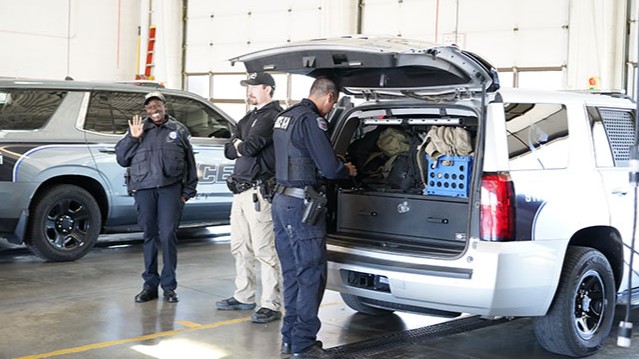
    Greeley Police Department officers unload vehicle inside a large garage.

    The Greeley Police Department has made important changes to its automated license plate reader (ALPR) program to better protect privacy and ensure accountability. The new changes include stopping the sharing of license plate data with out-of-state and national sources, reducing how long the data is kept, and adding monthly audits of how the technology is used.

    The changes were made following a City Council work session on September 8, 2026, where the police department presented information on its ALPR program and drone operations. Following the meeting, department leaders focused on improving public trust, auditing processes, transparency, and data retention.

    Access the full news release.

    Greeley Police Department officers unload vehicle inside a large garage.

    The Greeley Police Department has made important changes to its automated license plate reader (ALPR) program to better protect privacy and ensure accountability. The new changes include stopping the sharing of license plate data with out-of-state and national sources, reducing how long the data is kept, and adding monthly audits of how the technology is used.

    The changes were made following a City Council work session on September 8, 2026, where the police department presented information on its ALPR program and drone operations. Following the meeting, department leaders focused on improving public trust, auditing processes, transparency, and data retention.

    Access the full news release.

  • Greeley police deploy drones to track suspects in lieu of dangerous pursuits

    Share Greeley police deploy drones to track suspects in lieu of dangerous pursuits on Facebook Share Greeley police deploy drones to track suspects in lieu of dangerous pursuits on X (formerly Twitter) Share Greeley police deploy drones to track suspects in lieu of dangerous pursuits on Linkedin Email Greeley police deploy drones to track suspects in lieu of dangerous pursuits link

    Greeley police are using drones to track fleeing suspects and avoid dangerous high-speed chases. Here's how the technology works and when police deploy it.

    Access the full video.

    Greeley police are using drones to track fleeing suspects and avoid dangerous high-speed chases. Here's how the technology works and when police deploy it.

    Access the full video.

  • Greeley launches drone pilot program for first responders

    Share Greeley launches drone pilot program for first responders on Facebook Share Greeley launches drone pilot program for first responders on X (formerly Twitter) Share Greeley launches drone pilot program for first responders on Linkedin Email Greeley launches drone pilot program for first responders link

    Greeley launched a drone pilot program to assist emergency responders get eyes on the scene before officers or paramedics arrive. Fox31 Denver reporter Alliyah Simms spoke with Greeley police on how the drone is utilized.

    Access the full video.

    Greeley launched a drone pilot program to assist emergency responders get eyes on the scene before officers or paramedics arrive. Fox31 Denver reporter Alliyah Simms spoke with Greeley police on how the drone is utilized.

    Access the full video.

  • Greeley Police have a new real-time update center

    Share Greeley Police have a new real-time update center on Facebook Share Greeley Police have a new real-time update center on X (formerly Twitter) Share Greeley Police have a new real-time update center on Linkedin Email Greeley Police have a new real-time update center link

    Greeley Police Department staff explain how data collected in real time can help the department be more efficient by determining how many officers to send to an incident ahead of time.

    Access the full video.

    Greeley Police Department staff explain how data collected in real time can help the department be more efficient by determining how many officers to send to an incident ahead of time.

    Access the full video.

  • Inside Greeley: Real Time Information Center FAQs

    Share Inside Greeley: Real Time Information Center FAQs on Facebook Share Inside Greeley: Real Time Information Center FAQs on X (formerly Twitter) Share Inside Greeley: Real Time Information Center FAQs on Linkedin Email Inside Greeley: Real Time Information Center FAQs link

    In 2024, Greeley Police launched the Real-Time Information Center (RTIC), a technology system to enhance public safety by deterring and solving crimes. On March 13, 2025, GPD staff met with the Greeley community to answer questions about the center. In this Inside Greeley segment, Greeley Police Public Information Officer Kristen Duus answers some frequently asked questions about what the RTIC is, how the technology works and what successes the program has seen so far.

    Access the full video.

  • Real Time Information Center Town Hall (3/26/25)

    Share Real Time Information Center Town Hall (3/26/25) on Facebook Share Real Time Information Center Town Hall (3/26/25) on X (formerly Twitter) Share Real Time Information Center Town Hall (3/26/25) on Linkedin Email Real Time Information Center Town Hall (3/26/25) link

    In 2024, Greeley Police launched the Real-Time Information Center (RTIC). The RTIC uses technology to enhance public safety by deterring and solving crimes.

    On March 13, 2025, GPD staff met with the Greeley community to answer questions about the center. Play the presentation to learn more about how the RTIC works and what successes the program has seen so far.

    Access the full video.

  • NEWS RELEASE: City of Greeley Launches Real Time Information Center

    Share NEWS RELEASE: City of Greeley Launches Real Time Information Center on Facebook Share NEWS RELEASE: City of Greeley Launches Real Time Information Center on X (formerly Twitter) Share NEWS RELEASE: City of Greeley Launches Real Time Information Center on Linkedin Email NEWS RELEASE: City of Greeley Launches Real Time Information Center link

    The City of Greeley has kicked off preliminary operations in its Real-Time Information Center (RTIC), a state-of-the-art public safety initiative that supports effective and efficient police service to the Greeley community. It is the first of its kind in Northern Colorado.

    “We expect Greeley’s population to double by 2060. With growth comes an increased need for staffing and resources. We are proud of the more than 300 first responders who work tirelessly to respond to emergencies, which included more than 70,000 calls to 911 last year — still, public safety and 911 calls are on the rise annually, averaging a 5% increase each year. The use of innovative policing technology ensures we can keep response times down and deploy our resources when and where we need them most,” said Chief of Police Adam Turk.

    Access the full news release

Page last updated: 25 Nov 2026, 11:03 AM