License Plate Readers in Greeley: How They Work and How We Protect Your Privacy

Share License Plate Readers in Greeley: How They Work and How We Protect Your Privacy on Facebook Share License Plate Readers in Greeley: How They Work and How We Protect Your Privacy on X (formerly Twitter) Share License Plate Readers in Greeley: How They Work and How We Protect Your Privacy on Linkedin Email License Plate Readers in Greeley: How They Work and How We Protect Your Privacy link

ALPR Program

The Greeley Police Department uses automated license plate readers, or ALPRs, to help find stolen vehicles, missing people, and vehicles connected to crimes. These cameras read license plates on public roads and compare them to lists of vehicles that police are already looking for.

We know residents want two things at once: a safe community and strong protection of their privacy. This page explains what the cameras do and don't do, how we use the information, the limits we've put in place, and what we've changed after hearing from City Council and the community.

At a glance

  • What the cameras capture: A vehicle's license plate, the state, the vehicle's type and color, and the time and location.
  • What they don't capture: Faces, drivers, passengers, or personal information. The cameras do not use facial recognition.
  • How long data is kept: 21 days, unless it's needed as evidence in a criminal case.
  • Who can search it: Only trained, authorized personnel, for a documented law enforcement reason. Every search is logged.
  • What it's never used for: Immigration enforcement, proactive traffic tickets, personal use, harassment, or targeting anyone based on a protected characteristic.


Why it matters

Vehicles are part of nearly every crime we investigate. Burglaries, robberies, hit-and-runs, retail theft, and domestic violence calls often involve a vehicle arriving or leaving. When a victim or witness can only tell us about a vehicle, a license plate reader can turn that small detail into a real lead.

Time matters. In a missing-person case or after a violent crime, the first hours count. Information that once took hours to share through a bulletin can now reach officers in seconds.

How ALPR helps in Greeley. A Police Department review documented 297 cases supported by ALPR from January 2021 through August 2026, including:

Number of CasesResult
78Arrests
46Stolen vehicles recovered
13Stolen license plates recovered


These cases range from vehicle theft and hit-and-run crashes to missing persons, wanted-person arrests, and property and violent crime.

From 2024 to 2025, motor vehicle theft in Greeley declined 35%, and violent crime declined 6%. Technology isn't the only reason. Officers, dispatchers, prosecutors, community partners, and residents all play a role. But ALPR is one of the tools that helps us work more effectively.


Real-world uses

An alert is a starting point, not a decision. When a camera flags a vehicle, officers verify the plate and state, confirm the record with dispatch, and ensure there is a legal reason before contacting anyone. Cameras can misread plates or match outdated records, which is why a person always checks first.

  • Finding a missing person: In October 2024, a Southern Colorado law-enforcement agency entered a missing older adult and associated vehicle information into state and national law-enforcement databases, as well as a Flock Safety hot list. Greeley Police received a Flock camera alert when the vehicle entered the city during the early morning hours. Officers located the vehicle and confirmed that the driver was lost but safe. The individual was reunited with family later that morning.

  • Solving a hit-and-run: In late October 2026, officers investigated a hit-and-run that seriously injured a pedestrian on Highway 85. Evidence recovered at the scene helped guide the investigation, and officers used the city’s Flock Safety automated license plate reader camera system to cross-reference that evidence. The system generated a match that provided investigators with a suspect vehicle description. Officers located the vehicle and took two individuals into custody in connection with the incident.
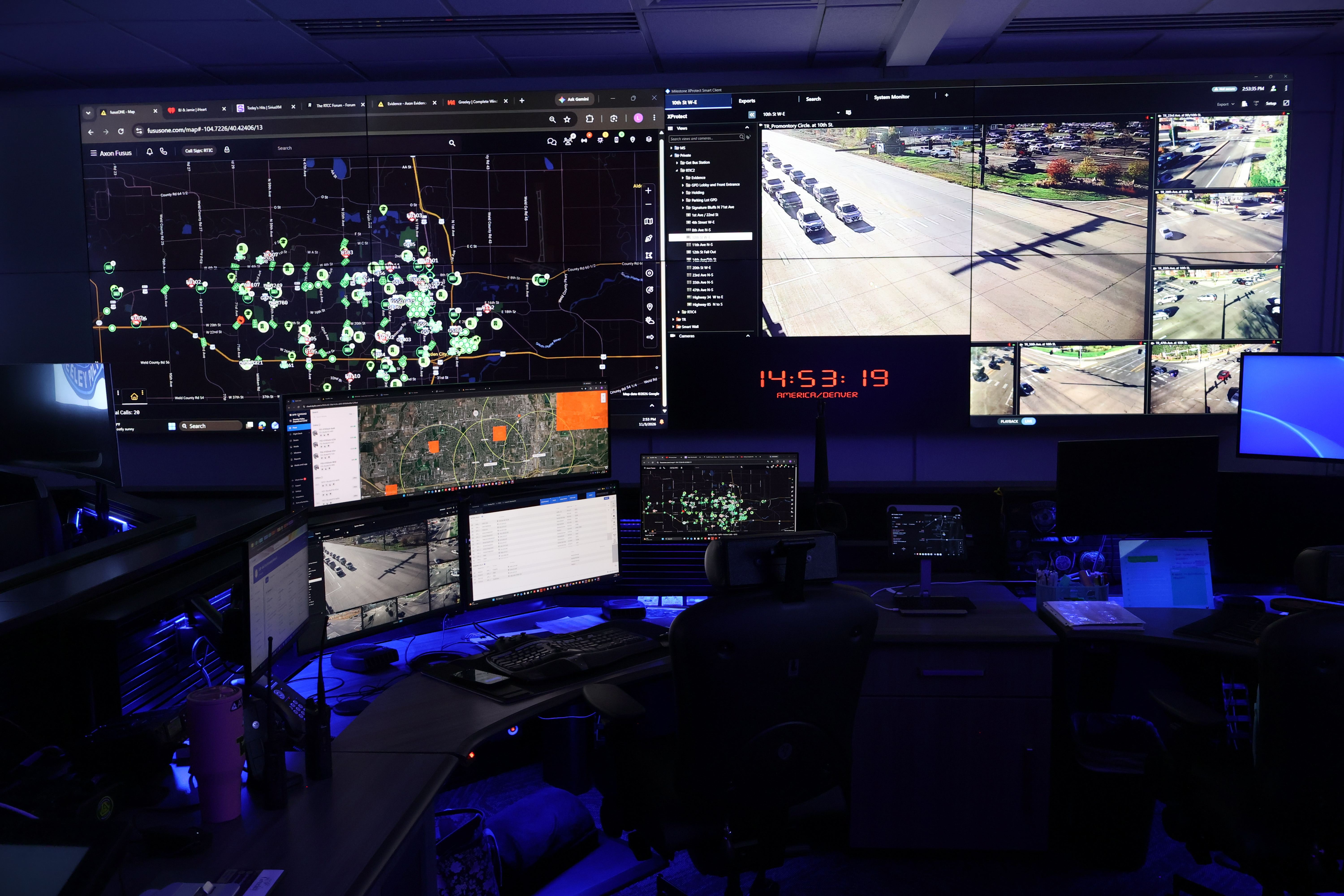
  • monitors of city streets and a map of Greeley with computer work stations.Recovering a stolen car: In September 2026, the Greeley Police Department used Flock Safety automated license plate reader (ALPR) technology to identify a vehicle reported stolen from another jurisdiction. Flock camera alerts helped investigators locate the vehicle, while real-time drone support from the Real Time Information Center provided additional situational awareness. Greeley Police officers coordinated with state and regional law-enforcement partners to safely stop the vehicle on Highway 34. The driver was taken into custody without incident on motor vehicle theft-related charges.

  • Warrant Arrest: In May 2026, Greeley Police officers were searching for an individual with multiple felony warrants. The vehicle associated with the individual was entered into the Flock Safety automated license plate reader system as a “Hot List” vehicle. When the vehicle was detected by Flock cameras in Greeley, Real Time Information Center staff used traffic cameras to monitor its location and provide updates to responding officers. Officers located the vehicle, confirmed the driver’s identity, and conducted a traffic stop, resulting in the individual's arrest.

  • Solving a homicide: Solving a homicide: In October 2021, officers responded to a residential fire that was later determined to have been intentionally set to conceal a homicide. Initial evidence included limited surveillance footage showing two individuals and an unidentified vehicle leaving the area shortly after the fire began. Investigators cross-referenced location data from the victim’s phone with automated license plate reader (ALPR) records, identifying a vehicle captured near the scene within minutes of the incident. The ALPR lead enabled detectives to identify and locate the individuals involved, resulting in arrests and successful criminal prosecutions.

  • Capture suspect vehicle leaving the scene or area of a crime. In July 2026, Greeley Police investigated an incident involving an alleged assault and concerns for a child’s safety after a suspect left the area in a vehicle. Flock Safety automated license plate reader cameras helped identify and locate the suspect vehicle as it departed the scene. Real Time Information Center staff then deployed a Drone as a first responder to monitor the vehicle and provide its location to responding officers. Officers located the vehicle and took the suspect into custody.


How we protect your privacy

SafeguardWhat it means for you
No facial recognitionCameras capture vehicles and plates, not people. They do not identify drivers or passengers.
Short retentionFlock data is deleted after 21 days unless it's needed as evidence in a criminal case.
Limited accessOnly trained, authorized personnel with an official law-enforcement purpose may search the data.
Every search documentedBefore searching, employees must enter a case or call number and choose one of six specific reasons. Every search is logged.
Monthly auditsThe department reviews ALPR use every month to ensure searches comply with policy.
No out-of-state or national sharingGreeley turned off all out-of-state and national data sharing on September 9, 2026, and all in-state data sharing on October 28, 2026
Not for saleGreeley owns its Flock data. It is never sold to third parties.
Prohibited usesThe data may not be used for immigration enforcement, proactive traffic tickets, personal reasons, harassment, or targeting anyone based on a protected characteristic.
Consequences for misuseMisuse is investigated and may result in discipline, termination, referral to the District Attorney, and loss of an officer's state certification.


Where the program stands today

We listened, and we made changes. On Sept. 8, 2026, the Police Department presented its ALPR program to City Council at a work session. Council members and residents raised questions about privacy, data sharing, oversight, and how long data is kept. The department reviewed the program with those concerns in mind and made these changes.

What we heardWhat we changed
Concern about Greeley data being accessed by agencies in other states or nationallyTurned off all in-state and national ALPR data sharing, effective October 28, 2026.
Data is kept too longReduced Flock data retention from 30 days to 21 days
Need for stronger oversightBegan auditing ALPR use every month
Searches should have a clear, documented reasonEvery search now requires a case or call number and one of six specific reasons, down from 43


State-funded Elsag cameras are ending. Separately, on Sept. 4, 2026, the State of Colorado notified the City that it will stop funding the Elsag ALPR cameras after 2026 due to reduced funding from the Colorado Auto Theft Prevention Authority. This affects two truck-mounted systems and the cameras on two speed trailers. Greeley is ending its contract and will work with the Colorado State Patrol to return or dispose of the equipment.

What's next. City Council is reviewing policy options for ALPR technology. We'll update this page as decisions are made.


State Landscape on License Plate Readers

License plate readers are being discussed across Colorado and the country. Greeley follows these conversations closely and will comply with any changes in state or federal law.

Colorado. In 2026, a bipartisan bill, Senate Bill 26-070, proposed new statewide limits on license plate reader data. It passed a Senate committee in February but was set aside on April 29, which ended it for the session. Lawmakers may take up the topic again when the Legislature meets in January 2027.

Here is how Greeley's current practices compare with what the bill proposed:


TopicSB-26-070
PROPOSED BILL
Today in Greeley
Data retentionMost data kept no longer than 30 days21 days, unless needed as evidence
Out-of-state sharingProhibitedTurned off on September 9, 2026.
Sharing with third partiesProhibitedData is never sold; sharing only for legitimate law enforcement purposes, and documented
Warrant for older dataRequired for data older than 72 hoursNot required; a case or call number and a documented reason are required for every search


A second 2026 proposal. Senate Bill 26-071, the Surveillance Accountability and Freedom Ensured (SAFE) Act, proposed statewide rules for how law enforcement uses surveillance technology, including license plate readers, facial recognition, and drones. It would have set retention limits by technology type, banned the sale of surveillance data, limited sharing to active investigations, required a warrant for most uses of facial recognition, and called for audits by the Colorado Attorney General every two years. The bill was held in the Senate Judiciary Committee on Feb. 23, 2026, and did not become law. Greeley already prohibits selling its data, and its cameras do not use facial recognition.
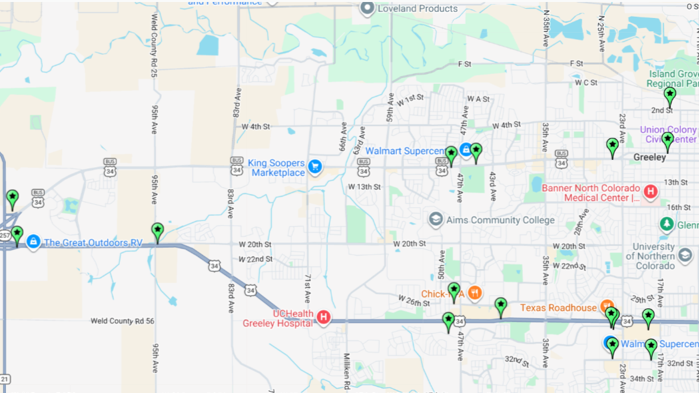
ALPR Program

The Greeley Police Department uses automated license plate readers, or ALPRs, to help find stolen vehicles, missing people, and vehicles connected to crimes. These cameras read license plates on public roads and compare them to lists of vehicles that police are already looking for.

We know residents want two things at once: a safe community and strong protection of their privacy. This page explains what the cameras do and don't do, how we use the information, the limits we've put in place, and what we've changed after hearing from City Council and the community.

At a glance

  • What the cameras capture: A vehicle's license plate, the state, the vehicle's type and color, and the time and location.
  • What they don't capture: Faces, drivers, passengers, or personal information. The cameras do not use facial recognition.
  • How long data is kept: 21 days, unless it's needed as evidence in a criminal case.
  • Who can search it: Only trained, authorized personnel, for a documented law enforcement reason. Every search is logged.
  • What it's never used for: Immigration enforcement, proactive traffic tickets, personal use, harassment, or targeting anyone based on a protected characteristic.


Why it matters

Vehicles are part of nearly every crime we investigate. Burglaries, robberies, hit-and-runs, retail theft, and domestic violence calls often involve a vehicle arriving or leaving. When a victim or witness can only tell us about a vehicle, a license plate reader can turn that small detail into a real lead.

Time matters. In a missing-person case or after a violent crime, the first hours count. Information that once took hours to share through a bulletin can now reach officers in seconds.

How ALPR helps in Greeley. A Police Department review documented 297 cases supported by ALPR from January 2021 through August 2026, including:

Number of CasesResult
78Arrests
46Stolen vehicles recovered
13Stolen license plates recovered


These cases range from vehicle theft and hit-and-run crashes to missing persons, wanted-person arrests, and property and violent crime.

From 2024 to 2025, motor vehicle theft in Greeley declined 35%, and violent crime declined 6%. Technology isn't the only reason. Officers, dispatchers, prosecutors, community partners, and residents all play a role. But ALPR is one of the tools that helps us work more effectively.


Real-world uses

An alert is a starting point, not a decision. When a camera flags a vehicle, officers verify the plate and state, confirm the record with dispatch, and ensure there is a legal reason before contacting anyone. Cameras can misread plates or match outdated records, which is why a person always checks first.

  • Finding a missing person: In October 2024, a Southern Colorado law-enforcement agency entered a missing older adult and associated vehicle information into state and national law-enforcement databases, as well as a Flock Safety hot list. Greeley Police received a Flock camera alert when the vehicle entered the city during the early morning hours. Officers located the vehicle and confirmed that the driver was lost but safe. The individual was reunited with family later that morning.

  • Solving a hit-and-run: In late October 2026, officers investigated a hit-and-run that seriously injured a pedestrian on Highway 85. Evidence recovered at the scene helped guide the investigation, and officers used the city’s Flock Safety automated license plate reader camera system to cross-reference that evidence. The system generated a match that provided investigators with a suspect vehicle description. Officers located the vehicle and took two individuals into custody in connection with the incident.

  • monitors of city streets and a map of Greeley with computer work stations.Recovering a stolen car: In September 2026, the Greeley Police Department used Flock Safety automated license plate reader (ALPR) technology to identify a vehicle reported stolen from another jurisdiction. Flock camera alerts helped investigators locate the vehicle, while real-time drone support from the Real Time Information Center provided additional situational awareness. Greeley Police officers coordinated with state and regional law-enforcement partners to safely stop the vehicle on Highway 34. The driver was taken into custody without incident on motor vehicle theft-related charges.

  • Warrant Arrest: In May 2026, Greeley Police officers were searching for an individual with multiple felony warrants. The vehicle associated with the individual was entered into the Flock Safety automated license plate reader system as a “Hot List” vehicle. When the vehicle was detected by Flock cameras in Greeley, Real Time Information Center staff used traffic cameras to monitor its location and provide updates to responding officers. Officers located the vehicle, confirmed the driver’s identity, and conducted a traffic stop, resulting in the individual's arrest.

  • Solving a homicide: Solving a homicide: In October 2021, officers responded to a residential fire that was later determined to have been intentionally set to conceal a homicide. Initial evidence included limited surveillance footage showing two individuals and an unidentified vehicle leaving the area shortly after the fire began. Investigators cross-referenced location data from the victim’s phone with automated license plate reader (ALPR) records, identifying a vehicle captured near the scene within minutes of the incident. The ALPR lead enabled detectives to identify and locate the individuals involved, resulting in arrests and successful criminal prosecutions.

  • Capture suspect vehicle leaving the scene or area of a crime. In July 2026, Greeley Police investigated an incident involving an alleged assault and concerns for a child’s safety after a suspect left the area in a vehicle. Flock Safety automated license plate reader cameras helped identify and locate the suspect vehicle as it departed the scene. Real Time Information Center staff then deployed a Drone as a first responder to monitor the vehicle and provide its location to responding officers. Officers located the vehicle and took the suspect into custody.


How we protect your privacy

SafeguardWhat it means for you
No facial recognitionCameras capture vehicles and plates, not people. They do not identify drivers or passengers.
Short retentionFlock data is deleted after 21 days unless it's needed as evidence in a criminal case.
Limited accessOnly trained, authorized personnel with an official law-enforcement purpose may search the data.
Every search documentedBefore searching, employees must enter a case or call number and choose one of six specific reasons. Every search is logged.
Monthly auditsThe department reviews ALPR use every month to ensure searches comply with policy.
No out-of-state or national sharingGreeley turned off all out-of-state and national data sharing on September 9, 2026, and all in-state data sharing on October 28, 2026
Not for saleGreeley owns its Flock data. It is never sold to third parties.
Prohibited usesThe data may not be used for immigration enforcement, proactive traffic tickets, personal reasons, harassment, or targeting anyone based on a protected characteristic.
Consequences for misuseMisuse is investigated and may result in discipline, termination, referral to the District Attorney, and loss of an officer's state certification.


Where the program stands today

We listened, and we made changes. On Sept. 8, 2026, the Police Department presented its ALPR program to City Council at a work session. Council members and residents raised questions about privacy, data sharing, oversight, and how long data is kept. The department reviewed the program with those concerns in mind and made these changes.

What we heardWhat we changed
Concern about Greeley data being accessed by agencies in other states or nationallyTurned off all in-state and national ALPR data sharing, effective October 28, 2026.
Data is kept too longReduced Flock data retention from 30 days to 21 days
Need for stronger oversightBegan auditing ALPR use every month
Searches should have a clear, documented reasonEvery search now requires a case or call number and one of six specific reasons, down from 43


State-funded Elsag cameras are ending. Separately, on Sept. 4, 2026, the State of Colorado notified the City that it will stop funding the Elsag ALPR cameras after 2026 due to reduced funding from the Colorado Auto Theft Prevention Authority. This affects two truck-mounted systems and the cameras on two speed trailers. Greeley is ending its contract and will work with the Colorado State Patrol to return or dispose of the equipment.

What's next. City Council is reviewing policy options for ALPR technology. We'll update this page as decisions are made.


State Landscape on License Plate Readers

License plate readers are being discussed across Colorado and the country. Greeley follows these conversations closely and will comply with any changes in state or federal law.

Colorado. In 2026, a bipartisan bill, Senate Bill 26-070, proposed new statewide limits on license plate reader data. It passed a Senate committee in February but was set aside on April 29, which ended it for the session. Lawmakers may take up the topic again when the Legislature meets in January 2027.

Here is how Greeley's current practices compare with what the bill proposed:


TopicSB-26-070
PROPOSED BILL
Today in Greeley
Data retentionMost data kept no longer than 30 days21 days, unless needed as evidence
Out-of-state sharingProhibitedTurned off on September 9, 2026.
Sharing with third partiesProhibitedData is never sold; sharing only for legitimate law enforcement purposes, and documented
Warrant for older dataRequired for data older than 72 hoursNot required; a case or call number and a documented reason are required for every search


A second 2026 proposal. Senate Bill 26-071, the Surveillance Accountability and Freedom Ensured (SAFE) Act, proposed statewide rules for how law enforcement uses surveillance technology, including license plate readers, facial recognition, and drones. It would have set retention limits by technology type, banned the sale of surveillance data, limited sharing to active investigations, required a warrant for most uses of facial recognition, and called for audits by the Colorado Attorney General every two years. The bill was held in the Senate Judiciary Committee on Feb. 23, 2026, and did not become law. Greeley already prohibits selling its data, and its cameras do not use facial recognition.

  • Take Survey
    Share License Plate Readers in Greeley ~ What's your take? on Facebook Share License Plate Readers in Greeley ~ What's your take? on X (formerly Twitter) Share License Plate Readers in Greeley ~ What's your take? on Linkedin Email License Plate Readers in Greeley ~ What's your take? link
Page last updated: 05 Nov 2026, 02:48 PM
