Set the Standard with Us: Data Centers and Greeley's Future

Share Set the Standard with Us: Data Centers and Greeley's Future on Facebook Share Set the Standard with Us: Data Centers and Greeley's Future on X (formerly Twitter) Share Set the Standard with Us: Data Centers and Greeley's Future on Linkedin Email Set the Standard with Us: Data Centers and Greeley's Future link

Data centers are being developed in communities all over the country. None have been proposed in Greeley yet, but the City is setting its expectations now through a development code update. We want your help to do this.

You might have seen news stories about data centers, buildings that help run everything from streaming videos and online banking to artificial intelligence. Many places have welcomed data centers and benefited from new revenue for schools, infrastructure, and quality-of-life funds through taxes. However, some communities have experienced negative, sometimes unexpected, impacts. We want to be well prepared if a data center is proposed in Greeley.

We aim to establish standards that support the community. Standards may cover noise, water use, environmental protection, and utility costs. Your input is crucial in creating these standards.

What Is a Data Center?

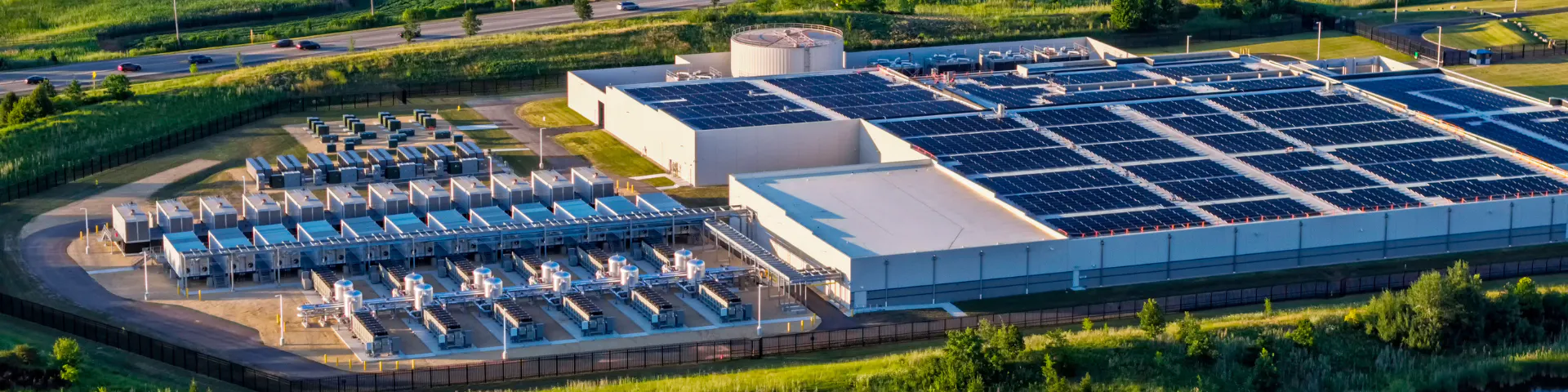
A data center is a facility that houses computer servers and the equipment needed to keep them running. These servers store, process, and move digital information. Every time you send a text, pay a bill online, see a doctor, stream a show, or use an AI tool, a data center is working behind the scenes.

Data centers need a lot of power and cooling to run day and night. Some equipment, such as generators and cooling systems, may be located outside the main building. This equipment can create noise, heat, and wastewater that may affect nearby areas. Understanding these potential impacts, and how City rules can help manage them, is an important part of planning for data centers.

Why this is a hot topic now: Artificial intelligence (AI) needs more computing power than older technologies. Companies are building larger data centers faster. With that, they often seek ample land, power, and water. For example, Colorado already has over 50 data centers in operation, and many communities along the Front Range are being approached for new ones.

Not all data centers are the same: Older designs typically cool servers using evaporative cooling towers, which consume large amounts of water each day. In contrast, newer designs use closed-loop or liquid-cooling systems that recirculate coolant within a sealed environment, resulting in minimal water loss. The type of cooling system a data center uses can affect the community. That is why Greeley wants to work with the community to develop clear standards before a data center is proposed in Greeley.

Cooling is only part of the water story. Generating the electricity a data center needs can use more water than cooling its servers. One estimate suggests about 85% of a data center’s water use comes from electricity generation and 15% from cooling. Construction and growth in the surrounding area can also increase water demand. That means two data centers of similar size can use 12 times or more different amounts of water. Greeley wants to consider each facility’s total water use, not just its cooling system, when developing standards. (Source: EKI Environment & Water, Inc.)

Why Greeley Is Developing Code

Communities that set expectations early get better outcomes. When standards are written in advance, every proposal is measured against the same community-backed rules, rather than negotiated from scratch under deadline pressure. Getting ahead means Greeley can:

  • Protect what matters most: our water, our neighborhoods, and our utility rates.
  • Compete from a position of strength: companies know exactly what Greeley expects, and the ones that meet the bar are welcome.

  • Capture real benefits: tax revenue, stable utility and tax rates for residents, and infrastructure investment, with the developer covering the costs it creates, not residents.

  • Build trust: decisions are made in the open, with your input on record before any project is on the table.

It is important to note that this is not an approval of any particular project. It's Greeley deciding what any and every proposed project would have to live up to.

Where Could a Data Center Go? Understanding Greeley's Zoning

A data center is a type of industrial development. It's a large building that runs all day, every day, and needs power, water, and road access. That's why it belongs in areas planned for industry. Greeley uses zoning to decide what can be built where.

The city has several zones meant for industrial and large-scale business uses. Each one allows a different level of activity:

Zone

What it's for

How it fits with neighbors

Industrial High Intensity (I-H)

The largest and busiest manufacturing and distribution businesses

Kept away from homes and shops because of its size, noise, traffic, or other impacts. Needs strong roads and utilities.

Industrial Medium Intensity (I-M)

Jobs, manufacturing, and distribution at a medium size

Fits near busy commercial areas. Needs good access to major streets, highways, or rail.

Industrial Low Intensity (I-L)

Smaller service; manufacturing and distribution businesses

Designed to have little impact on neighbors. Can mix with nearby shops and services.

Commercial High Intensity (C-H)

Large retail; service and employment uses

Found along busy roads and major intersections. Can be planned as a campus with shared open space.


Part of setting standards is deciding which of these zones, if any, are the right fit for a data center. Getting this right up front helps protect neighborhoods from noise and traffic and puts data centers where roads, power, and water can support them.

What Greeley Is Considering

Below is a list of standards the City is exploring. We are conducting a survey where we need your input. Your survey answers will help decide which standards matter most and how strict they should be.

  • Responsible Water Usage: Water is Greeley's most valuable resource, and any data center would need to prove it can operate without straining our industrial water supply.
  • Setting Standards for Noise: Cooling fans, equipment, and backup generators can generate significant noise. This should be an important consideration when developing regulations. We may need to establish sound barriers, noise limits, operating times and/or monitoring systems to minimize disturbances.

  • Infrastructure Responsibility: Data centers should act responsibly and contribute positively to the community by monitoring and reporting any emissions from their power generation and backup generators. Guidelines should be established for the responsible disposal of data center waste to ensure that these facilities blend into the surrounding environment and do not stand out excessively. Our water and air quality should be maintained.

  • Making Sure Growth Works for Greeley: A data center can bring significant private investment, a broader tax base, construction jobs, and skilled long-term positions. Greeley's job is to make sure those benefits are real, local, and enforceable, and that the costs remain with the developer.

  • Address the Issue Now: Banning data centers outright may raise legal challenges, while a moratorium, or temporary pause on new development, only delays the need to address them. State laws could change in the future, but those laws may not reflect what Greeley needs. We’re proud to be a Home Rule city because we believe our community knows what’s best for us. We can set our own priorities and develop regulations that reflect them.

  • Shape Solutions Together: Working with our community will help us develop regulations that reflect Greeley’s priorities. How can we manage data center development responsibly and fairly? What standards will help protect our quality of life while supporting the community’s needs?

How to Weigh In

  1. Take the survey below. It takes about 7 minutes and closes on December 15.
  2. Ask a question in the Q&A tool on this page. Staff will post answers here.
  3. Join a community conversation. Any opportunities for in-person input and information will be advertised on this page.
  4. Check this page frequently for updates.
  • Join Us on December 2: Data Center Information Session

    Share Join Us on December 2: Data Center Information Session on Facebook Share Join Us on December 2: Data Center Information Session on X (formerly Twitter) Share Join Us on December 2: Data Center Information Session on Linkedin Email Join Us on December 2: Data Center Information Session link

    The City of Greeley's public information session on data centers is scheduled for Wednesday, December 2, at the Union Colony Civic Center (UCCC), Hensel Phelps Theatre.

    Dan Diorio of the Data Center Coalition will present an overview of data centers, including how they operate and the potential positive and negative impacts they can have on communities. The presentation will explore multiple sides of the topic, including potential economic benefits as well as concerns related to water, energy, noise, infrastructure, and other community considerations.

    Following the presentation, there will be a moderated Q&A with City staff. Questions may be submitted by residents ahead of the event. More information on how to submit your question will be shared soon.

    Event Details

    • Date: Wednesday, December 2

    • Location: Union Colony Civic Center (UCCC), 701 10th Ave., Hensel Phelps Theatre

    • 5:30 p.m.: Doors open

    • 6 p.m.: Presentation begins, followed by Q&A.

    The event is free, but tickets are required for entry. Tickets will be available soon. Check back on this page for ticket information.

  • Public Information Session on Data Centers in the Works

    Share Public Information Session on Data Centers in the Works on Facebook Share Public Information Session on Data Centers in the Works on X (formerly Twitter) Share Public Information Session on Data Centers in the Works on Linkedin Email Public Information Session on Data Centers in the Works link

    supporting image

    The City of Greeley is planning a public information session to help residents better understand data centers, how they operate, and how they can affect communities. The event is tentatively planned for early December.

    The session speaker is Dan Diorio, who brings more than 16 years of experience in government affairs and public policy. He represents the Data Center Coalition, a national membership organization that works to inform communities and policymakers about the data center sector.

    Dan will share an industry perspective on how data centers operate, their potential economic and community benefits, and common questions and concerns about their development. Topics may include water use, energy needs, noise, infrastructure, and other potential community impacts. Following Dan's presentation, there will be a Q&A with City staff on data centers.

    The session is intended to help residents learn more about the industry and the considerations involved in data center development. The City is not promoting or opposing data center development, and community input will help inform the City's work to update development standards.

    The event details are still being finalized and may change. The City will share an update on this page and through its communication channels with official event details.

Page last updated: 13 Nov 2026, 09:04 AM